
[ad_1]
On Thursday, the Federal Reserve’s Federal Open Market Committee (FOMC) announced that it might decrease the federal funds fee by 25 foundation factors (bps), or 0.25%, due to “considerably elevated” inflation and an unemployment fee that “moved up however stays low.”
The speed is now 4.5% to 4.75%, down from 4.75% to five%. A decrease federal funds fee, or borrowing fee that banks cost one another, means decrease borrowing prices on bank cards and private loans — so there is a ripple impact that would instantly have an effect on your pockets. Banks determine individually how to answer fee cuts.
The information aligned with analyst expectations.
“We proceed to count on the Fed to ease coverage by 25bps at each assembly by June subsequent yr amid resilient however moderating progress and cooling labor market traits,” EY chief economist Gregory Daco advised Entrepreneur in an emailed assertion forward of the Fed’s announcement.
The Fed beforehand lower charges by half a point in September, in its first discount in 4 years. The following FOMC assembly, scheduled for December 17 by 18, is the final one of many yr; Daco, in addition to EY colleague and senior economist Lydia Boussour, both expect one other fee lower of 25 bps then.
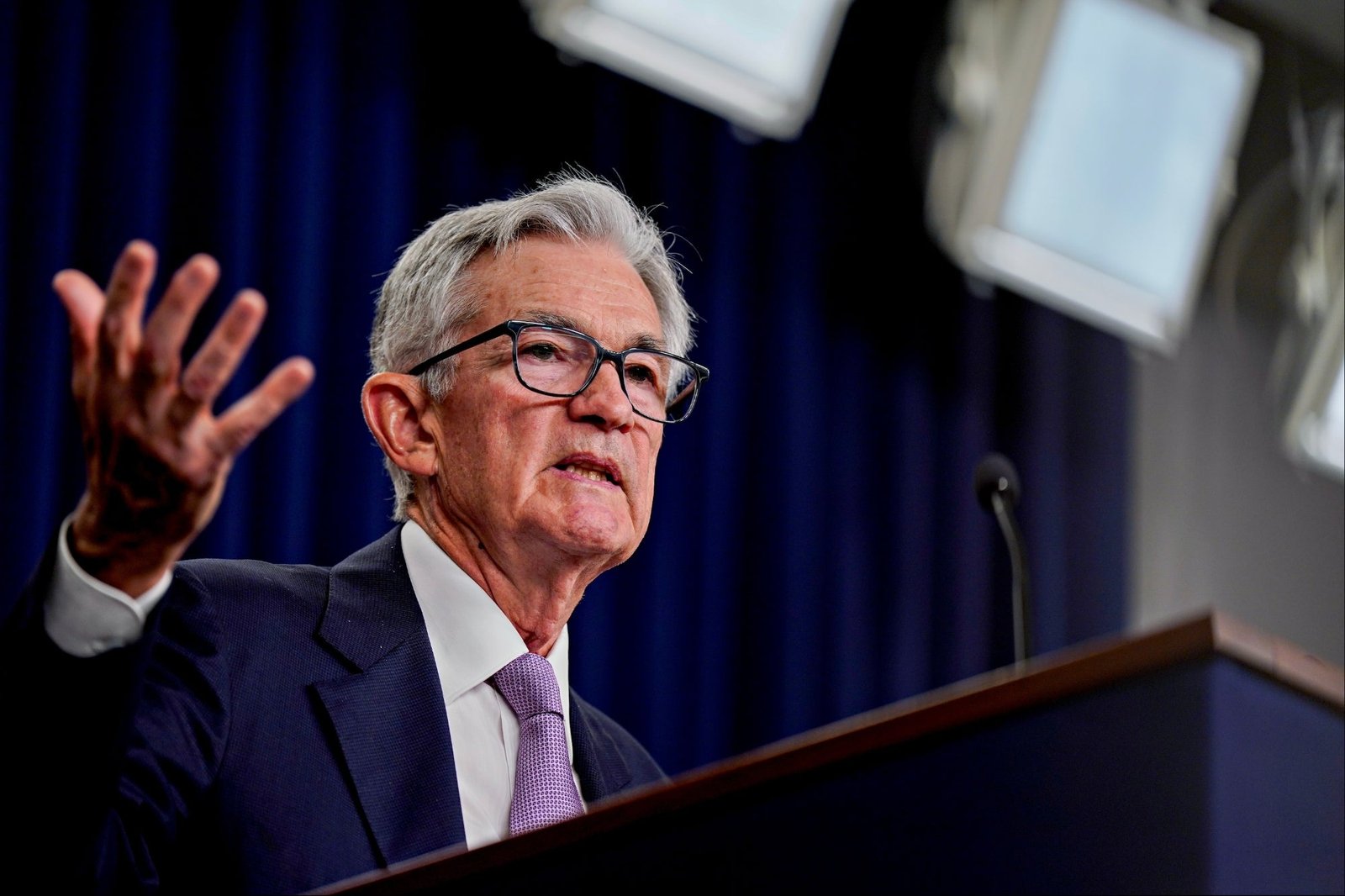
Federal Reserve Chair Jerome Powell. Photographer: Al Drago/Bloomberg by way of Getty Photographs
Daco wrote that after the Fed lower charges by an “outsized” 50 bps in September, it might go for a extra “gradual recalibration” in November due to “ongoing disinflation and softening labor market momentum together with sturdy productiveness progress.”
Elyse Ausenbaugh, Head of Funding Technique at J.P. Morgan Wealth Administration, additionally advised Entrepreneur in September that the 50 bps lower in that month “creates some respiration room to go at a slower (or every-other-meeting) tempo” for subsequent conferences.
The CME FedWatch Tool, a measure of the most recent possibilities of FOMC fee adjustments, agreed with Daco and Ausenbaugh’s predictions of a slower fee lower tempo. It positioned the chance of a 25 bps lower in November at 99.1% earlier than the choice was introduced.
Associated: ‘Stage Is Set:’ EY Senior Economist Expects Three Rate Cuts Before the End of the Year
[ad_2]
Source link
