
[ad_1]
It’s bizarre that there aren’t extra hundred-billion-dollar corporations, as a result of it does not appear that tough to do, Max Rhodes caught himself considering sooner or later in 2021.
He was certain making it look straightforward. The corporate he’d cofounded, known as Faire, had gone from stumbling startup to galloping unicorn. Fueled by a gradual food plan of VC cash, its valuation stored climbing: $1 billion, then $2.5 billion, as much as $12.4 billion, and even $12.59 billion, the numbers rising like bubbles in champagne, jubilant and intoxicating.
As with so many tech startups then, Faire was absolutely embracing the unofficial motto of Silicon Valley: “Development, development, development in any respect prices.” And why not? After 4 years of constructing and iterating, traders have been lastly behind them. The corporate had over a billion {dollars} of their capital to spend. Faire’s leaders doubled their group. Then they doubled it once more. They’d be the subsequent DoorDash or Airbnb at this price, they figured.
Then the difficulty started.
At Faire — a web based wholesale market that connects indie manufacturers (that wish to be bought in native shops and outlets) with small retailers (seeking to discover the most effective merchandise to inventory) — all of a sudden, many of those enterprise homeowners have been getting upset. And loud. “The customer support is sort of sluggish,” stated Sarah Kim, founding father of a stationery enterprise known as Selah Paper, on her YouTube channel on the time. One other YouTube reviewer, enterprise coach Dallas Gordon, griped, “They was proactive, however now it takes days and days to get a solution. If you get a solution in any respect.”
Associated: Avoid the ‘Too Fast, Too Furious’ Approach to Scaling a Startup
As Faire burned by means of $30 million a month, by the second quarter of 2022, its breathtaking gallop went slo-mo. Selections took perpetually, and its explosive growth was petering, leaving its management in a fog.
Within the tough months that adopted, they’d must query and probe, face laborious truths, and take even more durable steps to show the enterprise round. Survival, they realized, meant doing one thing extra significant than simply watching their buyer counts and valuations rise. They’d want to achieve sustainable growth.
“The lesson for me right here,” says Rhodes, “was that if it feels straightforward, it in all probability means you are doing it incorrect.”
Picture Credit score: Zohar Lazar
For years, the startup world had one rousing anthem: Scale! The concept was to maneuver quick, spend closely, seize as many shoppers as potential, after which monetize later (if in any respect). However that mannequin meant toast for lots of founders and traders, and in some ways appears incompatible with our current economy. So VCs and advisors started urging a unique goal: sustainable development.
“The objective is to create a business that is profitable, enduring, and generates a number of financial worth for its stakeholders,” says Gary Pisano, a Harvard Enterprise College professor who research firm development. “In the long run, you are a lot better off rising 12% a yr, each yr, as a substitute of 25% one yr after which 2% the subsequent. At a 12% development price, you double each six years in measurement.”
When corporations skyrocket with out correct planning, Pisano wrote just lately within the Harvard Enterprise Evaluate, they danger destroying the very issues that made them profitable within the first place — sometimes their agility, superior customer support, or signature tradition. Many a startup has gone for velocity, then been dashed on the rocks for not having the ability to ship on their guarantees — like Brex, a company card for startups valued at $12.3 billion that misplaced its id after increasing in too many instructions, and Peloton, which grew furiously in the course of the pandemic and, in keeping with Pisano, outpaced its provide chain, resulting in poor high quality and customer service. Each struggled afterward. And Faire, it appeared, was headed for a similar destiny.
Associated: How to Keep Pace With a Fast-Growing Business
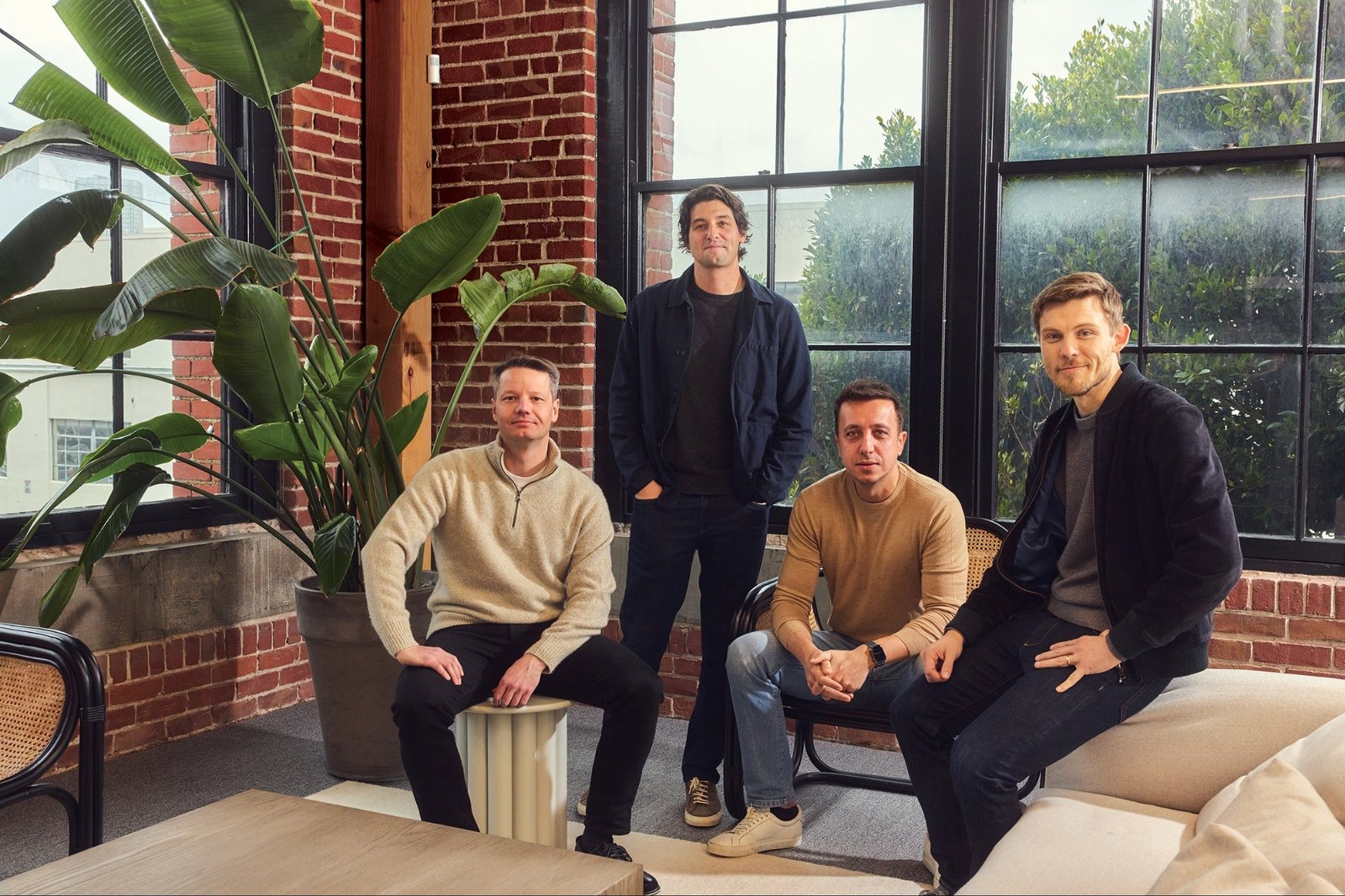
At the start, it was hardly a billion-dollar moonshot. Faire simply began due to an annoying drawback. A couple of decade in the past, Rhodes was working as a product supervisor at Sq., and had a facet hustle getting a high-end umbrella model into shops. As he schlepped to commerce reveals everywhere in the nation, he realized it was an inefficient approach for local retailers and types to find one another. Quickly, he joined forces with three Sq. colleagues — Jeff Kolovson, Marcelo Cortes, and Daniele Perito — to create a greater strategy to make that connection. They launched in 2017, simply as shops have been closing and the media was declaring a “retail apocalypse,” however the Faire founders believed that small companies would at all times be resilient and cherished by their communities. They usually have been proper.
With Rhodes as CEO and Kolovson as COO, the founders arrange an workplace at 2 Mint Plaza in San Francisco. Their wholesale platform had two main advantages. The primary was personalization; retailers might join, share particulars about themselves, and get algorithmic suggestions for which manufacturers have been a great match and probably to promote. The second huge providing got here in deal phrases: Retailers acquired 60 days earlier than they needed to pay for an order, together with free returns. That meant they might bodily study merchandise, provide them to prospects, and if these gadgets did not promote in two months, they might ship them again for gratis. As a result of most small manufacturers could not wait 60 days for cost, Faire would pay them instantly and assume the danger of the retailer defaulting. The corporate would solely earn cash when a sale went by means of, amassing fee from the vendor manufacturers and (later) cost charges.
Though this appeared like an incredible deal, there have been few takers at first. Manufacturers would not promote on Faire as a result of there weren’t many retailers there, and retailers weren’t as a result of there weren’t sufficient manufacturers to select from. Rhodes and his group have been flummoxed. Then he picked up a replica of a brand new e book known as Hacking Growth by Sean Ellis and Morgan Brown. It stresses the significance of describing your worth proposition in a catchy approach that solutions prospects’ principal query: “How is that this factor going to enhance my life?” Rhodes was at a commerce present attempting to rustle up curiosity when the reply got here to him: “Attempt before you purchase.”
That framing was lighter fluid. By becoming a member of Faire, retailers might check out stock at no cost! Nearly immediately, {the marketplace} ignited as customers flocked to it. However the honeymoon was quick. Sooner or later, FedEx confirmed up at 2 Mint Plaza with bins. And the bins stored coming. These have been all of the free returns that Faire had supplied, now being despatched by retailers who did not like or could not promote the merchandise they’d discovered there. “We had this lovely, very well-lit workplace,” remembers Rhodes, “and impulsively it was darkish, as a result of all these bins have been piling up and blocking the home windows.” The return price hit 30%. Even worse, defaults climbed to fifteen% as retailers who stored the merchandise by no means paid. Faire began dropping 50 cents on each greenback.
The founders spent the subsequent six months solving those problems. They programmed their algorithm to flag merchandise with excessive return charges, applied credit score limits, and made different changes. By mid-2018, the scenario stabilized, and it was time for the enterprise to develop.
Associated: Don’t Get Slowed Down by Growing Too Fast
At first, the founders approached that development sustainably. Up till then, they’d been utilizing a gross sales group and paid advertising and marketing to search out new prospects. However they noticed a less expensive and far more efficient technique — by turning its model companions into gross sales companions.
It labored like this: Think about a candlemaker sells its product on the platform. This model additionally has relationships with non-Faire retailers — companies that Faire would love as prospects too. To make that occur, the corporate created a program known as Faire Direct. Now any time the candlemaker referred a retailer who signed up on Faire, there could be no fee on future enterprise between the 2. Plus, the retailer acquired $100 off its first order. It was a heck of an incentive, and types jumped on it. Quickly the brand new retailers, wanting to get pleasure from Faire’s advantages, started referring their outdoors manufacturers to hitch — making a viral loop that rapidly spun 50% to 60% of the corporate’s development, and ushered in unicorn standing in October 2019.
Simply months later, nonetheless, the pandemic would result in Faire’s undoing — and never the best way anybody anticipated.
These first weeks have been utter chaos, as shops in every single place closed. Then retailers moved on-line, and Faire helped drive their digital transformation — organising web sites, adopting e-commerce instruments, determining stay promoting and native supply. As demand exploded, Faire’s founders rapidly constructed out its infrastructure. Buyers poured greater than $1 billion into the corporate over the course of a yr. Everybody’s focus turned development.
All through 2021, Faire spent lavishly on advertising and marketing campaigns and incentives that introduced in new retailers. They branched out into adjoining markets: bigger retailers, higher-end attire, Europe. They employed quickly. “We have been attempting to develop tremendous quick so as to keep forward of potential opponents, as a result of we felt like we might discovered this golden goose and we wanted to do all the pieces potential to ensure we held on to it,” says Rhodes. “That is what Uber had accomplished. That is what DoorDash had accomplished. Like, that was the playbook. And it felt actually good at first. Nevertheless it additionally type of felt icky; it appeared really easy.”
Within the second quarter of 2022, simply as Faire reached its highest valuation of $12.59B with a group of over 1,200, the founders knew one thing was off. Like an odd hum once you drive the automotive too quick, it was robust to say precisely what the issue was. However the indicators have been laborious to disregard. Opponents began popping up. Clients complained that the platform was sluggish, the service unhealthy, the manufacturers not as high-quality as they’d as soon as been. And internally, it took perpetually to make choices.
Then Faire began lacking its numbers. “We might provide you with a proof — after which we might nonetheless be lacking even as soon as we adjusted for it,” says the corporate’s president Lauren Cooks Levitan, who’d joined as CFO six months earlier than the pandemic. Now, she needed to steer the corporate out of its treacherous haze.
“Nicely, it wasn’t enjoyable. I will begin with that,” she says.
Associated: Go Small or Go Home: Why Fast Growth Isn’t the Best Solution for Your Startup
Faire’s management went into SWAT-team mode. Cooks Levitan, who has greater than 30 years of retail expertise, resorted to the best way she’s at all times tackled an issue: “Let’s begin by determining how a lot of this is because of what’s occurring to us, and the way a lot is because of issues we’re doing. It is the distinction between what we will management and what we will not.”
Rhodes talked to prospects. Kolovson checked out how they’d deployed their capital. What all of them got here again with was easy: Faire’s quick development had created a slower, much less environment friendly operation, and attracted transactional prospects with low lifetime worth.
How they acquired themselves into this mess was extra difficult, and took a while to unravel. First, the pandemic drove rates of interest down, VCs have been closely investing, and Faire assumed the surge in enterprise amongst its manufacturers and retailers would simply carry on going perpetually. Due to that, it rushed into new markets, which drew sources away from its core prospects. The growth additionally created a number of noise. Retailers instructed Rhodes that the platform was overwhelming; they could not discover what they have been on the lookout for the best way that they had earlier than. Plus, they needed to sift by means of a number of junk — as a result of Faire’s rigorously curated market was now awash with low-quality manufacturers.
Extra unhealthy information adopted. As the corporate’s leaders checked out their person conduct, they found that the hovering buyer development was adopted by fast churn. The most recent retailers had been lured in by pandemic-era incentives and promotions — however these folks simply scooped up the offers after which left. “We have been overly aggressive in considering, All we have to do is to get you to attempt our nice answer and you’ll keep,” says Cooks Levitan. “Anybody will take $100 to hitch up, however they have not made an emotional attachment. They do not have pores and skin within the recreation, and won’t be a great match. They might be too small, did not purchase commonly, weren’t occupied with altering their conduct. That is very completely different from figuring out an incentive that is acceptable for somebody who’d seemingly be a great match.”
On high of all that, Faire had a ballooning headcount. It wasn’t a lot that the corporate employed the incorrect folks — however to scale, it inserted two layers of administration, which was now crippling its former agility. “We had simply added approach an excessive amount of forms,” says Rhodes.
All this wanted to be fastened. Quick.
Associated: Don’t Ignore These 3 Principles When Your Company Is Growing Fast
The reckoning lifted the fog, to everybody’s reduction. As soon as Faire’s leaders acquired a transparent line of sight on rescue their startup, they snapped into course correction.
The founders threw out their roadmap and began contemporary. As a substitute of chasing new markets, they pulled again and labored on web site velocity, improved their algorithm’s skills to go looking and personalize, elevated high quality management, and deactivated hundreds of low-quality suppliers. “We emailed our retailers,” says Rhodes, “and instructed them we screwed up — we should not have let these manufacturers on the platform, as they weren’t a match.”
Faire additionally took a brand new strategy to buyer acquisition, focusing on acceptable retailers and constructing lasting relationships. This included a significant partnership during which Shopify made Faire its advisable wholesale market and took a stake within the firm; in flip, Shopify’s point-of-sale system turned Faire’s most well-liked supplier. The brand new association began driving wholesome enterprise to the platform, says Rhodes. In a separate effort launched in 2021, Faire leaned into serving to early-stage store homeowners open their first retailer — aiming to develop lifetime prospects.
As all this occurred, Faire laid off 7% of its workforce in October 2022 — after which round 20% extra in November 2023. “I used to be petrified of what the oldsters who have been staying would consider me as a pacesetter, and about how nicely the enterprise was doing,” says Rhodes. The corporate nonetheless had loads of money, however he and the opposite founders determined they wanted fewer layers, checkpoints, and conferences, and their massive group would in all probability run fantastic — possibly even higher — with a smaller group.
In a second daring transfer, Faire lowered its almost $13B valuation all the way down to $5B, one thing the founders have not talked about publicly till now. “It was one other choice that we actually agonized over,” says Kolovson. “However we felt like we have been going to be confronted with actuality in some unspecified time in the future — once we doubtlessly go public or if we elevate extra capital — and the earlier that we will embrace that, the higher.”
Associated: Navigating the Fast Track — How to Ensure Your Business Growth Doesn’t Outpace Your Vision
Jarring as these modifications have been, they did not really feel out of line with the tech business at massive. Between July 2022 and final yr, giants like Google, Meta, and Amazon pink-slipped tens of hundreds of workers, and fintech darlings Stripe, Ramp, and Klarna additionally lowered their valuations. “Nonetheless, it was a very laborious second within the firm,” says Kolovson.
Since then, Faire has refocused on relationships that matter — giving extra fairness to their remaining workers, and having candid conversations with traders. Ravi Gupta, a accomplice at Sequoia — which has backed Faire since its seed spherical — applauded the group’s braveness. “It was fairly wonderful to observe,” he says. “I do not suppose they’re the one firm on this planet that has confronted this problem. I do suppose they’re one of many few that has confronted it the best way they’ve.”
Faire declined to reveal its present income or estimated time to profitability, so it is laborious to know precisely how nicely these modifications labored. However the founders imagine they’ve shifted the corporate’s trajectory in the appropriate route. The platform is producing billions of {dollars} in quantity, which they are saying has about doubled within the final yr. They usually’re hiring once more — this time constructing out their group of greater than 920 at a cautious and regular tempo. “We really feel like we have righted this,” says Cooks Levitan, “and we’re nonetheless within the earlier stage of our development. We ought to be rising quick, and we now have a large alternative in entrance of us. Nevertheless it took some cleanup to get to the place the place we have been in a position to try this once more.”
Associated: 5 Companies That Grew Too Quickly (and What You Can Learn From Them)
If Faire’s group had an opportunity to do it another time, what would they alter? Ought to they not have taken VC cash? Tried to develop slowly however certainly? Or, to play satan’s advocate, what if Faire did must gun it in these years to field out its opponents and maintain onto its long-term place, even at the price of rising pains? What if that explosive development is the one motive it survived?
It is a curious query for Pisano. “There are actually occasions the place you gotta make the dash and mop up later,” he says. “However it’s essential assess: Can or not it’s mopped up? Or will you create a everlasting vicious circle you’ll be able to’t get out of?” For any startup confronted with that type of scenario, he advises founders to cease and perceive the dangers; suppose by means of each alternative forward and the way it might influence all the pieces that makes you profitable, like serving your purchasers and preserving what you are recognized for. “Then you’ll be able to hit the gasoline and you have a strong enterprise. It nonetheless could shake a bit, however a minimum of the wheels will not come off.”
Setting guardrails might be useful, provides Zeynep Ton, a professor on the MIT Sloan College of Administration and creator of The Case for Good Jobs, who has studied the success of corporations like Costco and Dealer Joe’s. That might be a rule you decide to, like “14% markup restrict” or “promotion from inside” — and even holding the valuation low — that guides choices. Or it might be a set of questions you ask when contemplating any new services or products. Costco’s are: Can we do it nicely? Can we save our prospects cash? Can we make a revenue on it? “Each firm ought to have their very own questions that allow them to see the influence of their choices on their workers and on the shoppers,” Ton says. “And that may, a minimum of, create boundaries the place you’ll be able to experiment.”
Associated: Go Small or Go Home: Why Fast Growth Isn’t the Best Solution for Your Startup
Faire’s founders interrupted what might have been a deadly downslide by being fast research who took a tough have a look at their errors and acted decisively. Whether or not they need to or should not have taken the investments, they got here away with a brand new playbook for rising quick whereas following a path to sustainable profitability. Rhodes says their questions going ahead are: Will it make life higher for our prospects? And can it try this higher than the options? “When the cash is free, you’ll be able to discuss your self into doing issues that simply do not make sense,” he says. “For those who’re attempting to construct a $100 billion firm and have a large influence on the world, it is actually laborious work.”
Again in early 2019, earlier than Faire was a unicorn, Rhodes instructed a podcaster, “Once I take into consideration the errors I made, they actually got here all the way down to being overeager, considering I knew greater than I did, and attempting to leap ahead in my profession and getting forward of my skis.”
Reminded of the remark in mild of the curler coaster he is simply been on, he can solely chortle at himself. “There’s a bit sample there,” he acknowledges. “I am fearful it could be a lesson that I simply am going to continue learning over and over.”
Associated: Future-Proofing Your Business — 5 Strategies for Sustainable Growth in Times of Change
[ad_2]
Source link
