
[ad_1]
Over 45,000 union dockworkers, all members of the largest union representing maritime employees in North America, the Worldwide Longshoremen’s Affiliation (ILA), went on strike early Tuesday after their contract expired. The central challenge is the upper pay that the employees are asking for, in addition to safety from the automation threat posed by AI.
The union is asking pay to extend by $5 per yr over the following six years, bringing beginning salaries as much as $50 to $69 per hour by 2030 from the $20 to $39 per hour they had been within the prior contract. Additional time hours and further shifts pushed nearly all of salaries for longshoremen working in New York Harbor as much as $150,000 per year or more in 2020.
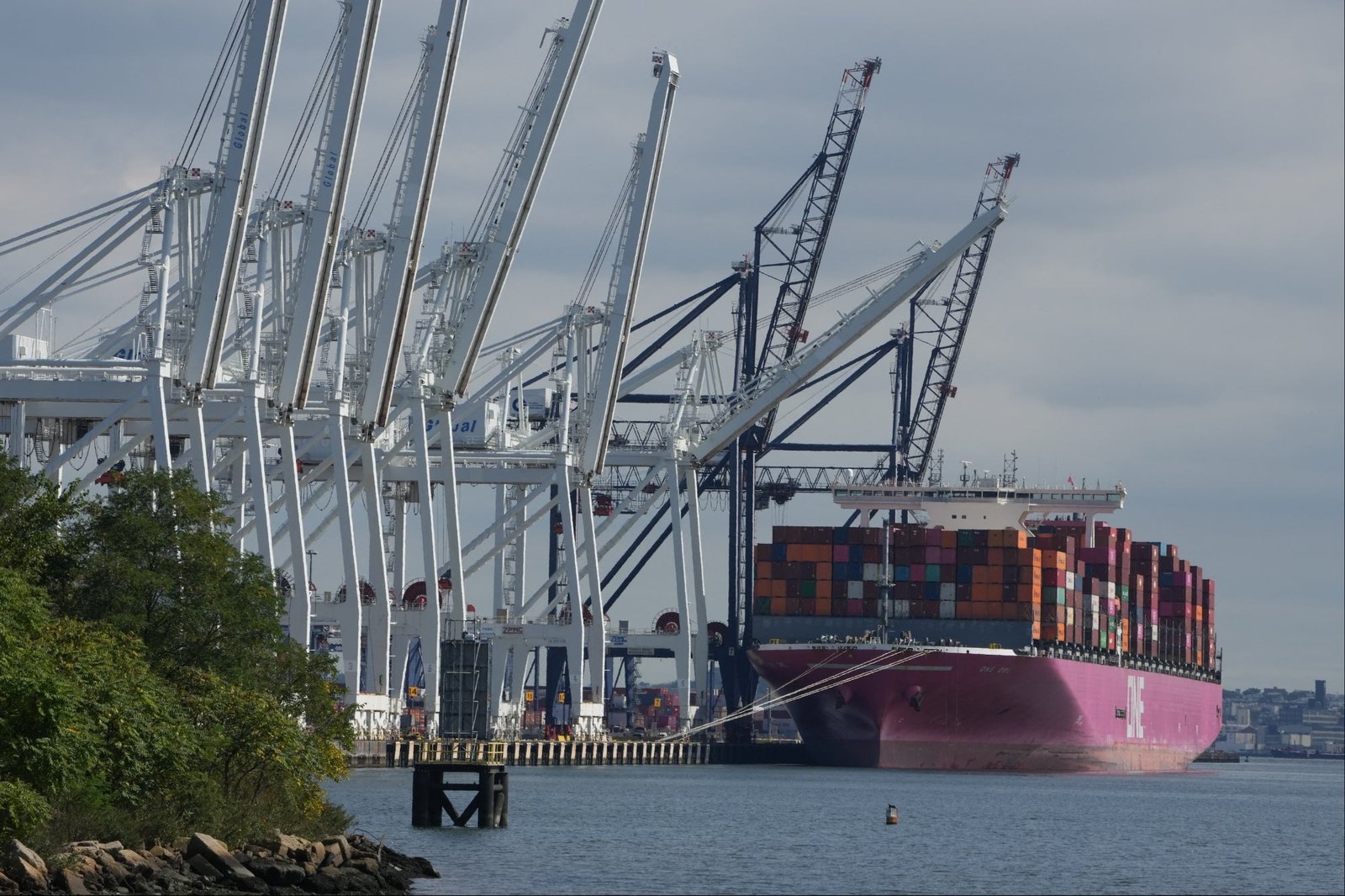
Container ship at East Coast ports. Photograph by BRYAN R. SMITH/AFP through Getty Photographs
The strike impacts about half of all U.S. sea imports or these from Maine to Texas. It is the primary on the East Coast since 1977.
How Will the Port Strike Have an effect on Shoppers?
JP Morgan analysts informed the Wall Street Journal that the port strike’s affect on the financial system is between $3.8 billion and $4.5 billion per day.
This implies the value of groceries and different items might go up — the seaports are the key channels via which items like meals, furnishings, garments, automobile elements, and pharmaceutical merchandise, attain customers.
An extended strike might imply delays in transport proper earlier than the vacations, plus larger prices for items. Companies and customers might each feel the effects.
Associated: Hollywood Writers Reach Tentative Agreement to End Strike—But Is the Actors’ Union Still Holding Out?
[ad_2]
Source link
