
[ad_1]
“This is a time of testing — a testing not only of our capacity collectively to reach coherent and intelligent policies, but to stick with them.” — Paul Volcker, 9 October 1979
Paul Volcker and his colleagues on the Federal Open Market Committee (FOMC) deserve reward for sticking to their marketing campaign to tighten financial coverage regardless of the painful recession of 1981 to 1982. Their actions ended the brutal stagflation that tormented the nation within the latter phases of the Nice Inflation of 1965 to 1982. Forty years later, it’s straightforward to neglect that Volcker’s applications had been a lot more durable to defend when he was, in financial coverage phrases, blazing a path by way of virgin forest.
The US has suffered devastating depressions and monetary panics in the middle of its historical past, however there has solely been one Nice Inflation. Resolving this extraordinary disaster required the US Federal Reserve to enact untested insurance policies that every one however assured a deep recession, a pointy decline in asset values, and a painful spike in unemployment.
Volcker spoke to the American Bankers Affiliation (ABA) on 9 October 1979 to win their assist for these insurance policies, understanding that his prescription would inevitably trigger ache and hardship within the quick time period. He appealed to his viewers’s sense of collective duty, acknowledging the extraordinary weight positioned on their shoulders. In spite of everything, bankers, financiers, and funding professionals are stewards of the nation’s credit score, which was repaired by Alexander Hamilton in 1790. The power to take care of that creditworthiness has fueled the US financial system, rescued it from financial crises, and guarded the nation from overseas threats.
The persistent inflation that Volcker was attempting to remove had broken the nation’s financial well being. Why was inflation so tenacious within the Nineteen Seventies? Some of the vital causes was a collective failure of policymakers to delay gratification. Unwilling to sacrifice his Nice Society applications, cut back the battle in Vietnam, or harm his personal reelection prospects, President Lyndon Johnson insisted the Fed preserve a very accommodative financial coverage. President Richard Nixon pursued a equally self-interested course, and inflation took maintain and have become endemic. Moderately than assert the Fed’s independence, Fed chairs William McChesney Martin, Jr., and Arthur F. Burns succumbed to the political strain.
By letting inflation fester for therefore lengthy, they made it that rather more tough for his or her successors to tame. Way more financial ache was required to repair the issue than if the Fed had decisively intervened earlier.
Volcker acknowledged the harm that the Fed’s wavering resolve had precipitated, however he vowed to persevere.
“Some would counsel that we, as a nation, lack the self-discipline to deal with inflation,” he instructed the ABA. “I merely don’t settle for that view.”

On 13 September 2022, the US Bureau of Labor Statistics reported that the CPI increased at an annualized rate of 8.3%, inserting extra strain on the Fed to reply aggressively. When Jerome Powell says that the Fed will preserve tightening till the job is completed, I strongly imagine that he’s honest. Nevertheless it stays to be seen whether or not the Fed’s actions will match these phrases over the approaching months. The primary collection of charge will increase and quantitative tightening had been comparatively painless. The subsequent section received’t be. If the Fed follows by way of, the financial system will contract, unemployment will rise, and markets will fall. All of this ache is important to make sure that the present short-term inflationary occasion doesn’t morph right into a replay of the Nice Inflation, which might threaten our long-term prosperity.
In the course of the Panic of 1907, J. Pierpont Morgan realized that the failure of the Trust Company of America could be a deadly tipping level that would plunge the nation off the financial precipice. Morgan famously said, “This is where the trouble stops,” and proceeded to orchestrate a rescue. Even after stopping the run on the Belief Firm of America, panic continued to unfold on Wall Road. Morgan spent the following three weeks rallying the assist of belief corporations, nationwide banks, non-public companies, politicians, and different stakeholders. Collectively, they pooled their assets and steered america away from the sting of the abyss. His well timed management — mixed with politicians’ terror on the prospect of confronting a future panic with out J. Pierpont Morgan — impressed the creation of the Fed six years later.
The Fed management now faces an analogous tipping level. They might want to resolve whether or not they have the resolve to stop a second Nice Inflation. However countering inflation shouldn’t be the Fed’s duty alone to bear: The second that’s now upon us would require everyone to resolve whether or not we’ll cling to the extreme however unsustainable spoils of the current or sacrifice now with a view to construct a richer legacy for future generations.
I hope we select the latter.
For those who favored this publish, don’t neglect to subscribe to the Enterprising Investor.
All posts are the opinion of the writer. As such, they shouldn’t be construed as funding recommendation, nor do the opinions expressed essentially replicate the views of CFA Institute or the writer’s employer.
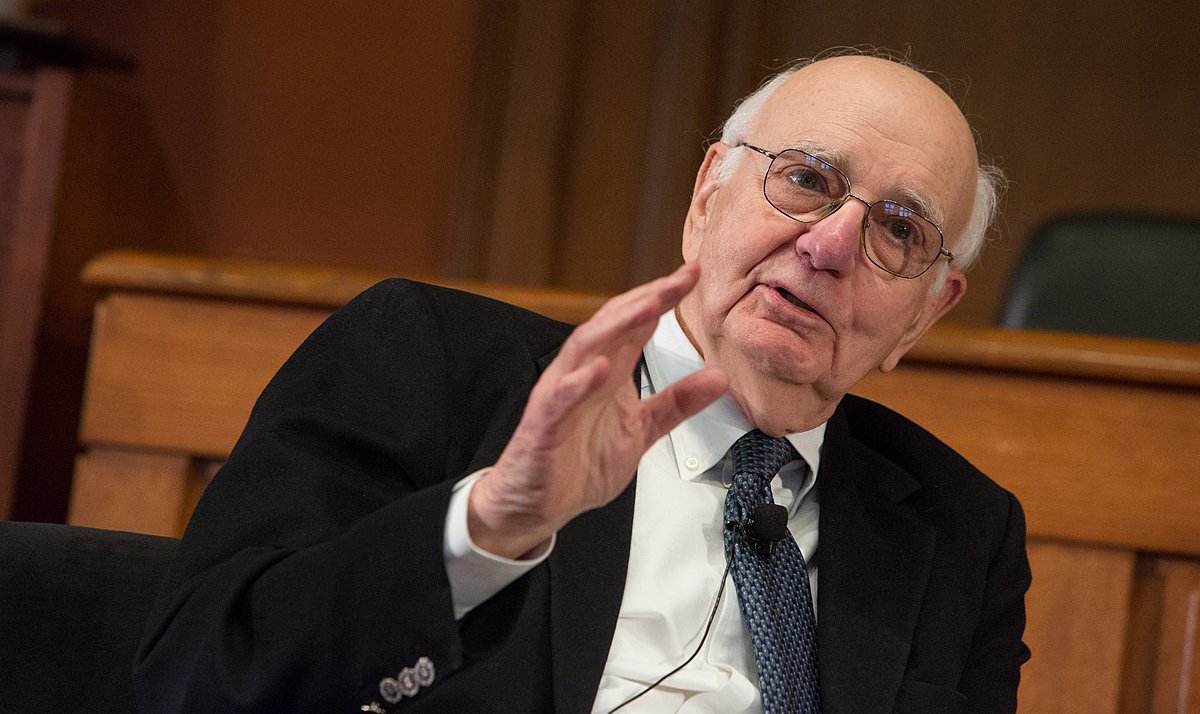
Image courtesy of the Edmond J. Safra Heart for Ethics. This file is licensed beneath the Creative Commons Attribution 2.0 Generic license. Cropped.
Skilled Studying for CFA Institute Members
CFA Institute members are empowered to self-determine and self-report skilled studying (PL) credit earned, together with content material on Enterprising Investor. Members can document credit simply utilizing their online PL tracker.
[ad_2]
Source link

.jpg)